




Is HIFU Facial Treatment Effective for Skin Tightening and Lifting?
A HIFU facial treatment helps with non-surgical skin tightening. It also aids in lifting the skin. This works well if the provider checks the client and the target area properly. They must also pick the right device settings. The method is great for slow, steady progress. It improves skin firmness and facial shape over time. However, it does not offer the same shifts as actual surgery. Good outcomes rely on clear goals. Proper planning is just as important. Healing times and final changes differ for each person. Therefore, a trained expert needs to look at your skin first. Only then should they suggest booking a session.

Is HIFU Facial Treatment Effective for Skin Tightening and Lifting?
Which HIFU Facial Results Count as Meaningful Improvement?
Real HIFU facial results are measured in a few simple ways. You can look at changes in skin firmness. Professionals also check for obvious sagging. The shape of the lower face is another key detail. Patients often notice a sharper jawline. They might also see a slight boost in their facial contours. These small improvements are very realistic. Therefore, you should not expect a sudden or massive change.
For clinics, evaluation should begin before treatment. The provider needs to document the client’s baseline condition, treatment goals, and the areas of concern. This gives both parties a practical reference for judging whether the HIFU facial treatment produced a worthwhile change.
When Is This Treatment Unlikely to Meet Expectations?
The procedure is less likely to satisfy someone expecting it to remove severe laxity or reproduce surgery. It may also be a poor choice when suitability has not been professionally assessed or the desired outcome is incompatible with a non-invasive approach.
Good consultation is part of treatment quality. The provider should explain the likely scale of improvement, discuss alternatives when appropriate, and avoid guaranteeing a particular result or number of sessions.
How Does the HIFU Mechanism of Action Support Facial Lifting?
Where Does the HIFU Mechanism Focus Ultrasound Energy?
The HIFU mechanism concentrates ultrasound energy at selected points below the skin surface. Different depths can address dermal tissue and deeper facial support layers, allowing treatment planning by layer rather than one approach throughout the face.
Choosing the correct depth is highly important. This is because the face, the neck, and the lower face are very different areas. They are not interchangeable zones. Therefore, the operator needs to pick the right treatment head. They must also set the planned depth to fit each specific spot. It is a mistake to think that a single cartridge will work well for every single pass.
How Do Thermal Response and Collagen Remodeling Affect the SMAS Layer?
The HIFU mechanism of action uses a controlled thermal response at the focal point to support collagen contraction and remodeling. Certain facial configurations can reach the superficial musculoaponeurotic system, or SMAS, as well as shallower dermal layers.
This explains why improvement should be assessed over time. The treatment initiates a tissue response rather than mechanically repositioning the face as surgery does, so the scale and pace of change will differ among clients.
How Should Clinics Evaluate HIFU Facial Results on the Jawline?
How Is a HIFU Device Used on the Jawline?
Using a HIFU facial treatment device on the jawline requires area mapping and deliberate depth selection. The provider must distinguish the face, neck, and lower-face zones, then choose an appropriate treatment head. A generic full-face pattern cannot replace this assessment.
The operator should also record the selected configuration and treated zones. These records make later review more useful and help a clinic maintain a consistent workflow across consultations, treatments, and follow-up visits.
What Makes HIFU Before-and-After Photos Reliable?
Reliable HIFU facial treatment before and after images should use comparable lighting, camera distance, head position, and facial expression. The clinic should record when each image was taken and obtain the required consent for storage or use.
Photography alone is not enough. Treatment date, area, device configuration, and follow-up timing provide context. One client’s comparison should never be presented as a guaranteed outcome for another person.
How Long Do HIFU Facial Results Last, and How Often Should Treatment Be Reviewed?
How Long Do Results Last for Different Clients?
There is no single answer to “How long does a HIFU facial treatment last?” Duration can differ with baseline laxity, age-related change, the treatment plan, and individual tissue response. One early observation cannot describe the full course of gradual collagen remodeling.
Clinics should compare each follow-up with the recorded baseline. This is more useful than promising a fixed number of months that may not apply to the individual client.
How Often Should You Have a HIFU Facial Assessment?
This question is best answered through reassessment, rather than following a one-size-fits-all fixed interval. Before discussing another procedure, a provider should review the client’s previous treatment response, current condition of the treatment area, and their personalized goals.
This approach helps avoid unnecessary treatment and keeps the decision tied to documented need. No repeat interval should be treated as automatic for every client.
What Should HIFU Facial Aftercare Include?
Which Post-HIFU Facial Responses May Be Temporary?
A post-HIFU facial response may include slight soreness or flushing, but these examples are not universal and cannot promise a predictable recovery. Clients should follow professional instructions because aftercare may vary with the treatment plan and individual response.
For the same reason, HIFU facial aftercare should not rely on a fixed recovery timeline taken from another client’s experience. The provider’s documented advice should remain the primary reference.
When Does HIFU Facial Aftercare Require Provider Review?
Clients should contact the provider when a response is persistent, worsening, unexpected, or otherwise concerning. This establishes a clear route for professional review without encouraging self-diagnosis.
Clinics should provide practical contact details and explain the follow-up process before the client leaves. Clear records of reported symptoms and subsequent guidance also support continuity of care.
How Can ZHEONE Support a Professional HIFU Workflow?
Which ZHEONE HIFU Configurations Match Face and Jawline Workflows?
At ZHEONE, we offer portable HIFU 4 IN 1 configurations for professional evaluation. The verified 4 IN 1 configuration includes line-cartridge options for the whole face, face and neck, and the middle or lower face, with separate optional depths intended for body use. The verified 4 IN 1 configuration uses multiple handles and treatment heads covering facial, neck, lower-face, and body applications.
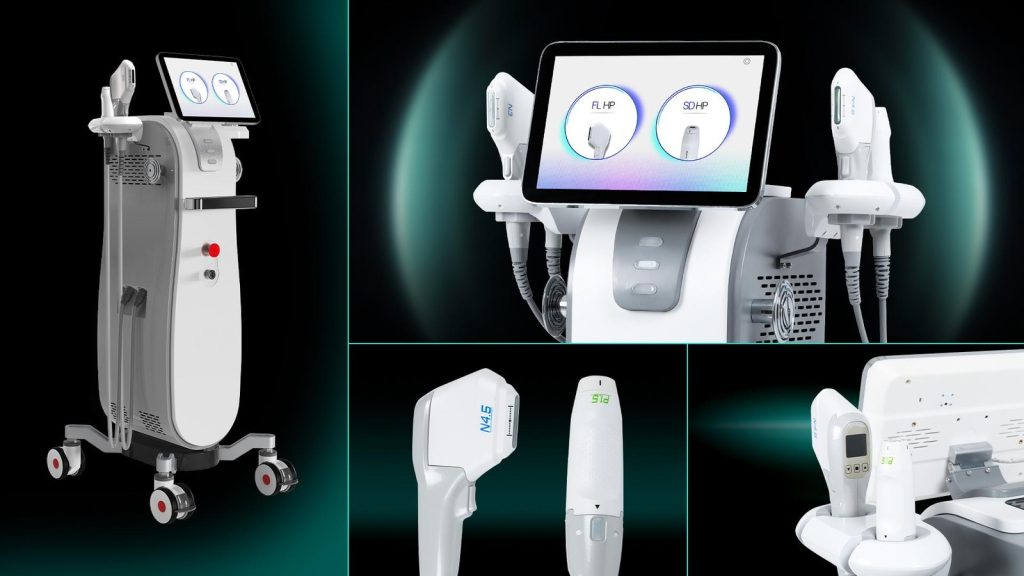
These configurations should be reviewed separately. Our team can help a buyer confirm the exact handles, treatment heads, and intended areas included in the selected configuration rather than assuming that specifications transfer from one system to another.
What Should Buyers Confirm Before Choosing Our HIFU Equipment?
Before adding equipment to a HIFU facial treatment workflow, buyers should confirm the exact configuration, included and optional treatment heads, intended treatment areas, operator training, recordkeeping process, and after-sales support. Local market and regulatory requirements also need independent confirmation before use.
At ZHEONE, we encourage buyers to connect device selection with the services the clinic actually plans to provide. This creates a clearer basis for product inquiries and helps avoid purchasing decisions based only on a broad feature list.
FAQ
Q: Is HIFU Facial Treatment Safe for Every Skin-Tightening Candidate?
A: No treatment should be assumed suitable for everyone. A trained provider should review the client’s condition, treatment area, relevant history, and expectations before recommending HIFU. A non-invasive procedure still requires appropriate screening, treatment planning, and follow-up.
Q: When Should HIFU Facial Results Become Noticeable?
A: The response is generally evaluated progressively because collagen contraction and remodeling do not create the same timeline for every client. Clinics should use standardized follow-up records rather than guarantee an immediate result or a fixed peak date.
Q: Can HIFU Replace a Surgical Facelift?
A: Not in every case. HIFU may support modest non-surgical tightening and contour improvement, but it should not be presented as equivalent to surgical correction, particularly when laxity is substantial. A professional assessment is needed to align the treatment choice with the desired outcome.


